January 24, 2009
And to the banana republic, for which it stands
The headline reads: Google ready to pursue its agenda in Washington. Of course it is. And everyone else had better be ready to do likewise.
Welcome to the new entrepreneurship. Forget competing on the merits. It’s now down to who can curry the most favor the fastest with the mob bosses in Washington. And Google is the apple of every pol’s eye right now.
What does Google want in Washington? They want laws passed, of course. They want laws passed and public money dispensed toward expanding high speed internet service. More internet service means more business for Google. They also want laws passed to prohibit other businesses (the businesses that serve as the public’s connection to the internet) from charging high use users more than they charge grandmothers who only email on the weekends. Google wants those grandmothers to have to pay $29.95 and up a month for their paltry emails to help defray the costs of the high bandwidth users, because Google is one of the high bandwidth users, as are many of its customers, and every little bit of subsidization helps its business.
At least in the short term.
In the end, it’ll all come back around to biting them on their fat, stupid asses.
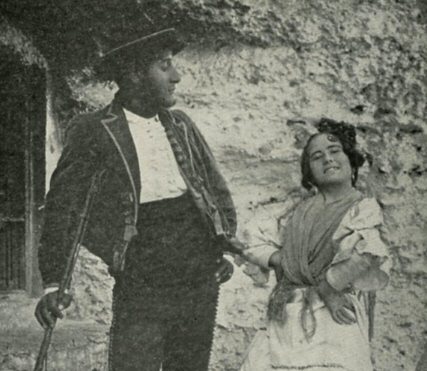
But here… it’s the weekend, and I was reminded of that great banana republic saga, alá the picture above, O. Henry’s skewering of connivers and crooks. Oh, look, it’s Obama and Google, conspiring to help the natives of this poor, poor land…
"Me and Henry Horsecollar brought the first phonograph to this country. Henry was a quarter-breed, quarter-back Cherokee, educated East in the idioms of football, and West in contraband whisky, and a gentleman, the same as you and me. He was easy and romping in his ways; a man about six foot, with a kind of rubber-tire movement. Yes, he was a little man about five foot five, or five foot eleven. He was what you would call a medium tall man of average smallness. Henry had quit college once, and the Muscogee jail three times—the last-named institution on account of introducing and selling whisky in the territories. Henry Horsecollar never let any cigar stores come up and stand behind him. He didn’t belong to that tribe of Indians.
"Henry and me met at Texarkana, and figured out this phonograph scheme. He had $360 which came to him out of a land allotment in the reservation. I had run down from Little Rock on account of a distressful scene I had witnessed on the street there. A man stood on a box and passed around some gold watches, screw case, stem-winders, Elgin movement, very elegant. Twenty bucks they cost you over the counter. At three dollars the crowd fought for the tickers. The man happened to find a valise full of them handy, and he passed them out like putting hot biscuits on a plate. The backs were hard to unscrew, but the crowd put its ear to the case, and they ticked mollifying and agreeable. Three of these watches were genuine tickers; the rest were only kickers. Hey? Why, empty cases with one of them horny black bugs that fly around electric lights in ’em. Them bugs kick off minutes and seconds industrious and beautiful. So, this man I was speaking of cleaned up $288; and then he went away, because he knew that when it came time to wind watches in Little Rock an entomologist would be needed, and he wasn’t one.
"So, as I say, Henry had $360, and I had $288. The idea of introducing the phonograph to South America was Henry’s; but I took to it freely, being fond of machinery of all kinds.
"’The Latin races,’ says Henry, explaining easy in the idioms he learned at college, ‘are peculiarly adapted to be victims of the phonograph. They have the artistic temperament. They yearn for music and color and gaiety. They give wampum to the hand-organ man and the four-legged chicken in the tent when they’re months behind with the grocery and the bread-fruit tree.’
"’Then,’ says I, ‘we’ll export canned music to the Latins; but I’m mindful of Mr. Julius Cæsar’s account of ’em where he says: "Omnia Gallia in tres partes divisa est;" which is the same as to say, "We will need all of our gall in devising means to tree them parties."’
"I hated to make a show of education; but I was disinclined to be overdone in syntax by a mere Indian, a member of a race to which we owe nothing except the land on which the United States is situated."
(1904)